

Observable systems, measurable ground, deliberate inquiry
This body of work is built from rock records, soil chemistry, and atmospheric analogs — systems you can hold, sample, and return to. Field observation is the method; the questions it raises reach well beyond the field.
Three active lines of Earth–planetary inquiry
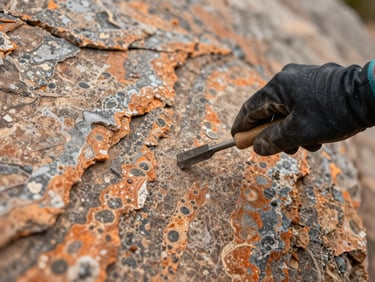
Sedimentary record and climate proxies
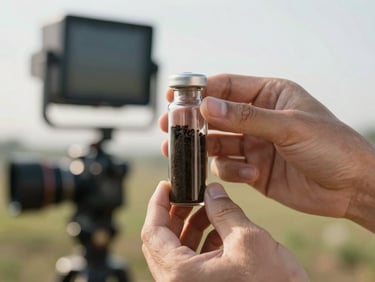
Soil chemistry and surface mineralogy
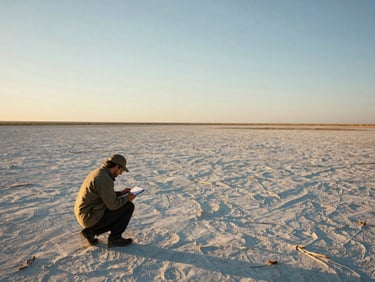
Atmospheric analogs and dry environments
Reading past climate states from layered rock sequences — what the stratigraphy preserves, what it omits, and how that shapes interpretation of ancient environments.
Sampling and chemical analysis of surface soils as analogs for planetary regolith — connecting terrestrial field data to questions about habitability elsewhere.
Studying arid and semi-arid sites as functional analogs for thin-atmosphere planetary surfaces — ground-truth data that remote sensing alone cannot supply.
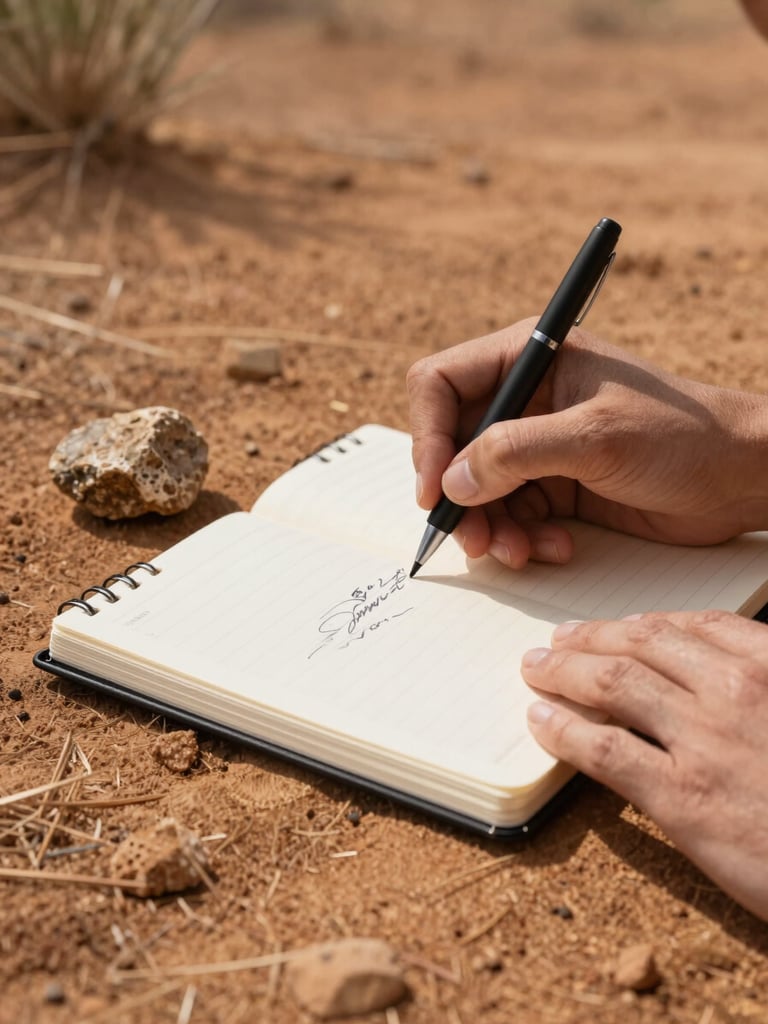
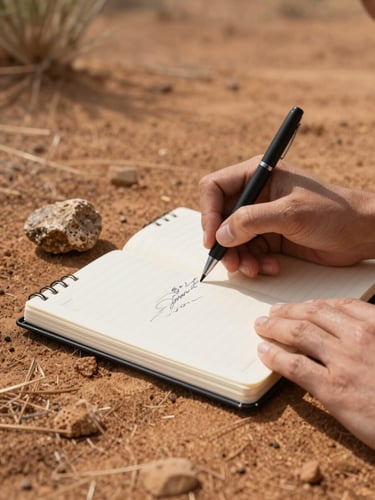
Notebooks, sampling, and direct observation
Computational and remote methods inform the work, but they follow from what is collected in the field. Notebooks accumulate before models are built; sampling decisions are made on site, not after the fact.
That sequence matters. It keeps the research tethered to physical reality and produces evidence that students and community partners can trace back to a specific place and time.
Planetary knowledge, grounded in land stewardship
Sustainability questions and land stewardship decisions need the same rigour as planetary science. Connecting those two bodies of evidence is a deliberate part of this practice — not an afterthought.
The same methods used to interpret planetary surfaces — soil chemistry, mineralogy, water signatures — are the methods communities use to understand their own land. This research does not stay in the archive.