
Life's requirements, held up against planetary uncertainty
Astrobiology demands that you hold two questions simultaneously: what does life need, and where else might those conditions exist? This work sits at that intersection — grounded in evidence, open to the genuinely unknown.


Publications, findings, and open threads
The research spans habitability modelling, biosignature detection, and the conditions under which microbial life persists in extreme environments. Each thread connects a planetary question to a testable Earth-based analogue.
Peer-reviewed outputs sit alongside working papers, conference contributions, and collaborative notes — because the thinking between publications is part of the record too.
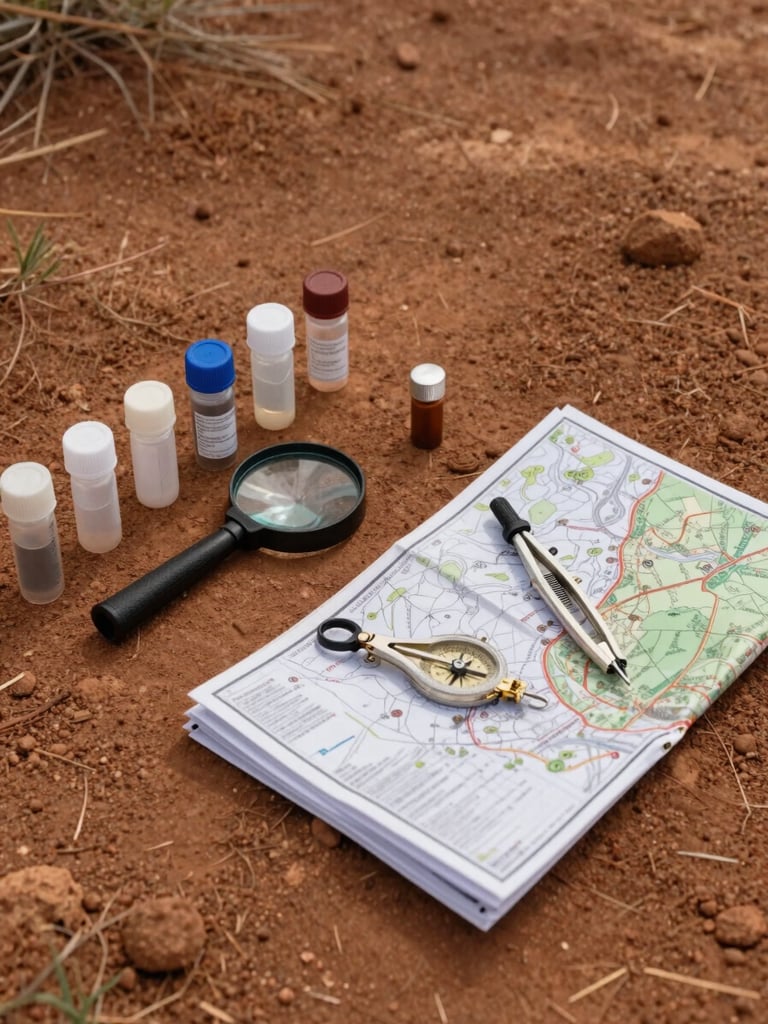
Grounding the cosmic in the measurable
Planetary habitability isn't only a remote-sensing problem. The most productive questions emerge in the field — salt flats, hypersaline lakes, and volcanic hydrothermal zones where Earth's chemistry echoes what we're looking for elsewhere.
Findings move outward from the field: into mentorship conversations, community education sessions, and studio work that helps translate evidence into something a wider audience can reason through.
If the conditions for life are more common than we assumed, what does that change about how we study this planet?
Research collaboration, student inquiry, and community-facing interpretation are all welcome starting points. If this line of work connects to something you're thinking about, reach out.